

Small businesses operate under constant pressure to do more with less. Limited staff, tight margins, and growing customer expectations often stretch teams to their limits. In this environment, artificial intelligence has shifted from being a futuristic concept to a practical productivity partner. Today, many high-quality AI tools are available at no cost, giving small businesses access to capabilities that were once reserved for large enterprises.
Research published by McKinsey & Company shows that AI adoption continues to accelerate across industries, especially in marketing, customer service, and operations. At the same time, organizations such as the World Economic Forum emphasize that AI is becoming a foundational business technology rather than an experimental one.
This guide explores the best free AI tools for small business productivity, how they work, and how to implement them effectively for sustainable growth.
Why AI Is a Game-Changer for Small Business Productivity
Productivity is not about working longer hours. It is about generating greater output from the same resources. AI tools improve efficiency by automating repetitive tasks, enhancing decision-making, and streamlining communication.
Small businesses commonly face challenges such as:
- Repetitive email responses
- Manual data entry
- Content creation bottlenecks
- Disorganized project tracking
- Slow customer response times
AI solutions address these issues by automating routine workflows and providing intelligent insights.
According to guidance from the U.S. Small Business Administration, adopting digital tools strategically can significantly improve operational efficiency and competitiveness. AI platforms fit directly into that strategic framework when implemented thoughtfully.
AI Writing and Content Creation Tools

Content creation consumes a substantial portion of a small business’s time. From website copy and product descriptions to newsletters and proposals, consistent communication is essential for credibility.
OpenAI ChatGPT
ChatGPT offers a powerful free version capable of generating structured outlines, email drafts, FAQs, and marketing content. It can assist in brainstorming, summarizing documents, and refining messaging.
Practical uses include:
- Drafting service descriptions
- Creating internal SOP documentation
- Generating blog outlines
- Producing structured customer responses
Grammarly
Grammarly enhances clarity, grammar, and tone. Professional communication builds trust, and automated proofreading reduces errors in client-facing content.
It supports:
- Email corrections
- Proposal editing
- Website content refinement
- Clearer internal documentation
Canva
Canva integrates AI writing assistance within its design environment. Small businesses can create social media graphics, presentations, and promotional materials while generating captions and descriptions simultaneously.
Together, these tools significantly reduce content production time while maintaining quality and consistency.
AI for Customer Support and CRM Efficiency

Customer expectations for fast responses have increased. AI-powered chatbots and CRM platforms help small businesses provide responsive support without hiring additional staff.
Tidio
Tidio combines live chat with AI automation. Its free plan allows businesses to create automated responses for common queries such as pricing, appointment scheduling, or business hours.
Benefits include:
- Reduced response time
- Automated lead capture
- Fewer missed inquiries
- 24/7 basic support coverage
HubSpot
HubSpot CRM offers a free CRM platform with automation features. It organizes customer data, tracks email engagement, and helps manage sales pipelines more efficiently.
With centralized information, businesses can respond intelligently and improve conversion tracking without complex systems.
AI for Project Management and Workflow Automation
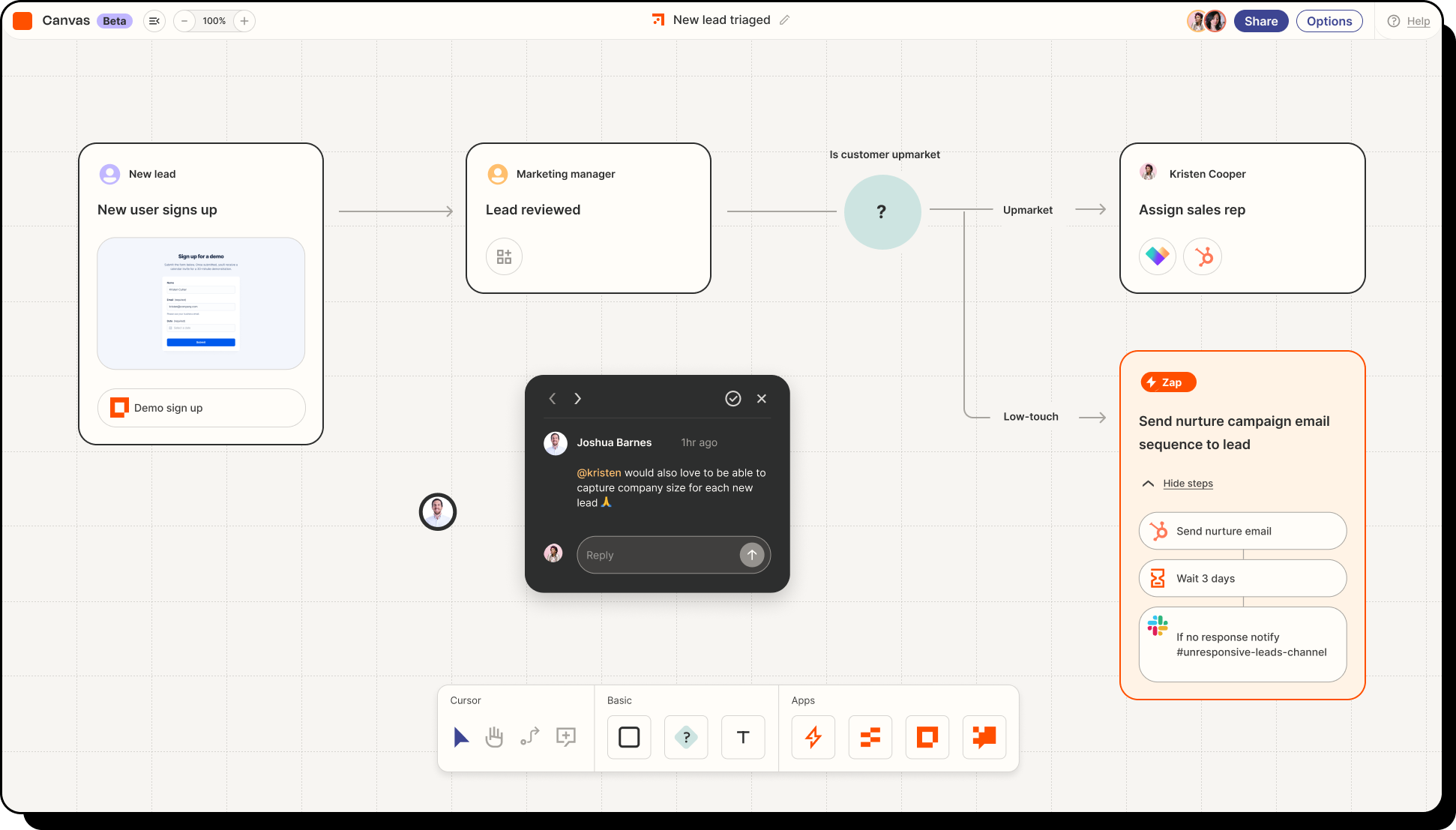
Operational clarity is essential for small teams juggling multiple responsibilities. AI-enhanced project management tools reduce manual coordination.
Notion Labs
Notion AI summarizes meeting notes, generates task lists, and improves documentation quality.
Atlassian
Trello provides automation rules that move tasks, assign deadlines, and trigger reminders automatically.
Zapier
Zapier connects applications so actions in one platform trigger responses in another. For example, website form submissions can automatically populate a CRM and notify a sales representative.
These integrations eliminate repetitive administrative work and reduce errors.
AI for Marketing and Analytics
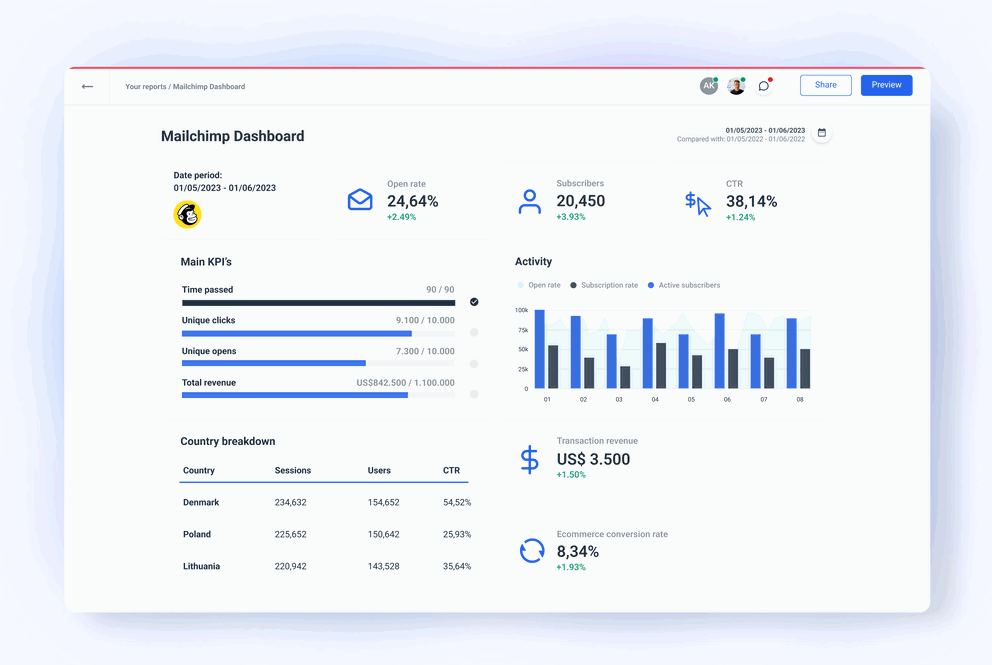
Marketing requires consistency, data analysis, and optimization.
Buffer
Buffer provides AI caption suggestions and scheduling capabilities in its free tier.
Google Analytics delivers AI-driven insights into traffic trends, user behavior, and conversion performance.
Intuit
Mailchimp includes AI-powered subject line suggestions and audience segmentation features in its free plan.
When combined, these tools create a data-informed marketing system that improves visibility and engagement.
Comparison Table: Top Free AI Tools for Productivity
Free AI Tools at a Glance
| Tool | Primary Use | Free Plan | Key Benefit |
|---|---|---|---|
| ChatGPT | Writing & idea generation | Yes | Faster drafting |
| Grammarly | Editing & tone correction | Yes | Professional communication |
| Canva | Visual design + captions | Yes | Efficient branding |
| Tidio | AI chat support | Yes | Instant responses |
| HubSpot CRM | Customer management | Yes | Organized pipeline |
| Notion AI | Documentation & summarization | Limited | Clearer workflows |
| Trello | Task automation | Yes | Workflow tracking |
| Zapier | App integration | Yes | Automated systems |
| Buffer | Social media scheduling | Yes | Consistent posting |
| Google Analytics | Data insights | Yes | Performance monitoring |
Each platform solves a different operational bottleneck. Combining complementary tools produces the strongest productivity gains.
Ethical and Responsible AI Use
Responsible adoption remains essential. The OECD outlines AI principles centered on transparency, accountability, and human oversight.
Small businesses should:
- Avoid sharing sensitive customer data unnecessarily
- Maintain human review for automated communication
- Enable security features like two-factor authentication
- Review privacy policies carefully
AI should enhance trust, not compromise it.
Frequently Asked Questions
Are free AI tools enough for small businesses?
Yes, many free tiers provide sufficient functionality for startups and small teams. As operations expand, paid plans may unlock advanced features, but free versions are often adequate during early growth stages.
Can AI fully replace employees?
No. AI handles repetitive and data-driven tasks efficiently, but strategic thinking, creativity, negotiation, and relationship management remain human strengths.
How quickly can productivity improve?
With proper implementation, improvements are often visible within weeks. Automated workflows and content generation tools can immediately reduce manual workload.
What is the most common implementation mistake?
Adopting too many tools simultaneously without integration planning can create confusion. Gradual implementation with clear objectives is more effective.
Is AI secure for customer data?
Security depends on the provider and internal practices. Businesses should choose reputable platforms and follow strong data protection measures.
Strategic Implementation Roadmap
Successful AI adoption follows a structured path:
- Audit existing workflows
- Identify repetitive time-consuming tasks
- Select one or two relevant AI tools
- Train team members properly
- Measure outcomes such as time saved or lead response speed
- Optimize gradually
This disciplined approach ensures technology supports growth rather than complicating operations.
Conclusion: Building a Smarter Small Business with Free AI Tools
Free AI tools have redefined what small businesses can accomplish without expanding budgets or staff. Writing assistants accelerate communication. Chatbots enhance customer support. Automation platforms streamline workflows. Analytics tools improve decision-making.
When implemented thoughtfully, AI increases operational efficiency, reduces manual errors, and allows teams to focus on strategic growth. The goal is not to automate everything but to automate what slows progress.
Small businesses that adopt AI strategically gain a competitive advantage through agility, responsiveness, and smarter resource allocation. Free AI tools provide an accessible starting point for building a more efficient, data-driven, and scalable business operation.

