
The technology sector rarely stands still, but this month has delivered a particularly dense wave of announcements across artificial intelligence, consumer hardware, cloud infrastructure, and next-generation connectivity. From advanced AI model releases to new silicon strategies and ambitious product unveilings, the industry’s biggest players are competing not just on features, but on ecosystems, long-term vision, and responsible innovation.
Below is a comprehensive look at the most significant tech industry announcements this month, what they mean for businesses and consumers, and how they are shaping the competitive landscape.
1. OpenAI Expands Its AI Model Ecosystem

This month, OpenAI announced major upgrades to its AI models, expanding multimodal capabilities, improving reasoning performance, and enhancing enterprise-grade security features. According to coverage from TechCrunch, the updates focus on faster response times, more accurate contextual understanding, and improved memory handling across sessions.
The company has also deepened integration options for developers, enabling more robust API access and fine-tuning workflows. Reports from The Verge highlight a strategic push toward business adoption, with emphasis on data privacy and scalable deployment.
Why this matters:
- AI tools are moving from experimental to mission-critical systems.
- Enterprises demand governance, compliance, and reliability.
- Multimodal AI (text, image, and audio combined) is becoming standard rather than optional.
This announcement signals that AI competition is no longer about model size alone; it is about usability, enterprise readiness, and ecosystem support.
2. Apple Introduces Next-Generation AI-Powered Devices
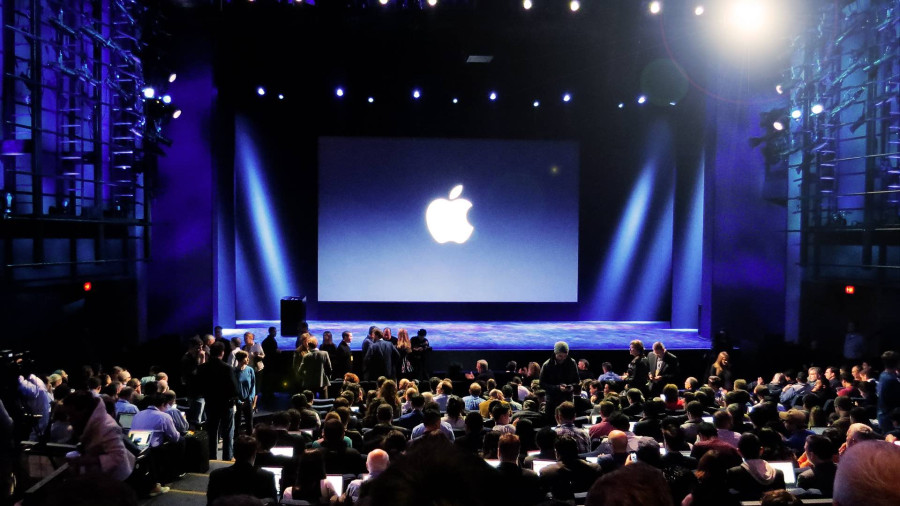
Apple Inc. unveiled updates to its hardware lineup, emphasizing on-device AI processing and custom silicon optimization. According to analysis from Bloomberg, the company is prioritizing AI features that run locally on devices, reducing reliance on cloud processing while improving speed and privacy.
The latest announcements include:
- Enhanced neural engine performance
- Improved battery efficiency
- AI-assisted productivity features across operating systems
The integration of AI directly into operating systems reflects a broader industry trend: intelligence embedded at the system level rather than layered as an add-on feature.
Industry impact:
- Device manufacturers must optimize hardware specifically for AI workloads.
- Consumers increasingly expect AI features without sacrificing privacy.
- Custom silicon design is becoming a competitive advantage.
3. Microsoft Expands Copilot and Cloud AI Integration

Microsoft continues to aggressively integrate AI into productivity tools and cloud services. This month’s updates, reported by CNBC, focus on deeper Copilot integration across enterprise software and expanded AI services within Azure.
Key announcements include:
- Advanced Copilot customization for enterprises
- Enhanced AI-driven security monitoring
- Improved scalability for AI workloads on Azure
By embedding AI directly into enterprise software suites, Microsoft strengthens its ecosystem lock-in strategy. The cloud infrastructure upgrades also address one of the biggest constraints in AI deployment: computational capacity.
Strategic takeaway:
Microsoft is positioning itself not only as a software provider but as an AI infrastructure backbone for global businesses.
4. NVIDIA Unveils New AI-Optimized GPUs

NVIDIA introduced next-generation GPUs designed specifically for AI training and inference at scale. Coverage from Reuters emphasizes improvements in performance-per-watt efficiency and data center scalability.
Highlights include:
- Higher memory bandwidth
- Lower latency processing
- AI inference optimization for real-time applications
As AI workloads increase exponentially, the semiconductor layer has become one of the most strategically important segments in technology. GPU innovation directly influences the speed and cost of AI advancements across industries.
5. Google Deepens AI and Search Integration

Google announced enhancements to AI-assisted search experiences and enterprise cloud tools. According to The Wall Street Journal, the company is experimenting with more conversational search interfaces and AI-generated summaries directly within results.
Major developments include:
- Context-aware search responses
- AI-enhanced advertising analytics
- Improved cloud AI services
The integration of AI into search fundamentally alters how information is discovered online. Traditional keyword-based indexing is increasingly supplemented by semantic understanding.
Comparison Table: Key Announcements at a Glance
| Company | Focus Area | Core Announcement | Strategic Goal | Industry Impact |
|---|---|---|---|---|
| OpenAI | AI Models | Advanced multimodal upgrades | Enterprise AI leadership | Faster AI adoption across sectors |
| Apple | Hardware + AI | On-device AI integration | Privacy-centric AI ecosystem | Stronger device differentiation |
| Microsoft | Cloud + Productivity | Copilot expansion + Azure scaling | AI-powered enterprise ecosystem | Cloud competition intensifies |
| NVIDIA | Semiconductors | Next-gen AI GPUs | Infrastructure dominance | Boosts AI training capacity |
| Search + Cloud | Conversational AI search integration | Reinvent information discovery | Changes digital marketing models |
Broader Industry Themes Emerging This Month
AI Is Now Infrastructure, Not a Feature
AI announcements across companies demonstrate that artificial intelligence has transitioned from an experimental capability to foundational infrastructure. Businesses now treat AI similarly to electricity or cloud storage—essential rather than optional.
Hardware and Software Are Converging
Chip manufacturers and software companies are aligning product roadmaps more closely than ever. AI workloads require tight hardware-software integration, leading to custom silicon strategies and vertical ecosystems.
Privacy and Governance Take Center Stage
With regulatory scrutiny increasing globally, companies are embedding compliance frameworks directly into product architectures. Security updates and enterprise controls are being emphasized as competitive differentiators.
Frequently Asked Questions
What is the most significant tech announcement this month?
The most impactful announcements center around AI infrastructure and enterprise integration, particularly model upgrades from OpenAI and GPU advancements from NVIDIA. These updates influence multiple sectors simultaneously.
How do these announcements affect small businesses?
Small businesses gain access to more powerful AI tools through cloud platforms and productivity software integrations. Costs may initially remain high for advanced AI workloads, but competition is likely to drive pricing improvements.
Are AI-powered devices replacing cloud computing?
Not entirely. On-device AI enhances privacy and speed, but large-scale training and advanced analytics still depend on cloud infrastructure.
Why are GPUs so important in AI development?
AI training requires massive parallel processing power. GPUs accelerate this process, reducing training time and operational costs significantly.
What should professionals focus on learning now?
- AI literacy and prompt engineering
- Cloud infrastructure basics
- Data governance and cybersecurity principles
These skills align with the current trajectory of the tech industry.
What Businesses and Professionals Should Do Next
Organizations should evaluate how these announcements align with long-term digital strategies. Instead of adopting every new feature immediately, decision-makers should:
- Conduct cost-benefit analysis
- Assess integration complexity
- Prioritize scalability and security
- Monitor vendor ecosystem stability
Technology shifts of this scale require measured implementation rather than reactive adoption.
Conclusion: A Defining Month for the Future of Technology
This month’s top tech industry announcements collectively illustrate a turning point. Artificial intelligence is no longer an isolated innovation but a central pillar across hardware, software, cloud, and search ecosystems. Companies are competing not only on performance metrics but on integration depth, enterprise reliability, and privacy assurance.
The convergence of AI models, custom silicon, scalable cloud platforms, and intelligent devices marks a structural transformation in the technology landscape. Organizations that understand these developments holistically—rather than viewing them as isolated news events—will be better positioned to adapt.
The coming months will likely build upon these foundations, accelerating competition and innovation even further. For professionals, businesses, and technology observers alike, staying informed and strategically adaptable has never been more essential.

